
Dome Shelter QLD (Queensland, Australia): A Practical Buying Guide
Compare dome shelter sizes, end-wall options and product inclusions, with practical site checks for farms, trade yards and storage projects in Queensland.
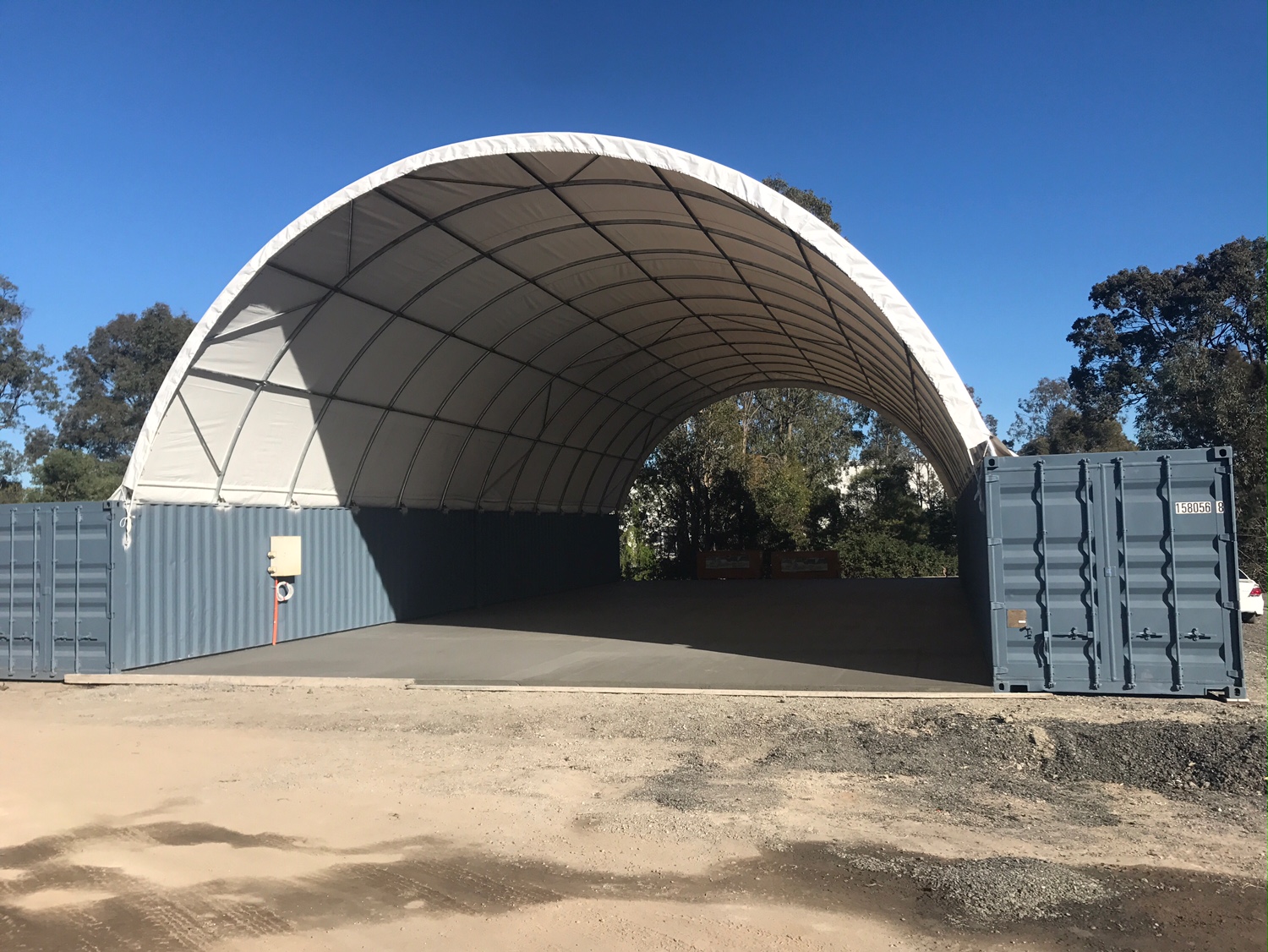
Choosing a dome shelter QLD (Queensland, Australia) starts with three questions: what needs to fit underneath it, how will equipment move through it, and what does your site require? A container-mounted dome can provide covered space for machinery, materials or everyday yard activities, but the right size depends on usable clearance as well as roof coverage.
This guide compares Budget Domes' container shelter range and explains what to check before requesting a quote for a Queensland property.
What is a container dome shelter?
A container dome shelter is a curved steel frame with a fabric cover, mounted to shipping containers. The containers form part of the support arrangement, while the dome covers the space between them. Open-end models allow access from both ends; end-wall models add screening at one end.
Budget Domes' listed products use double hot-dip galvanised steel tubing and a heavy-duty white PVC tarpaulin described as water resistant, fire retardant and UV protected. The listed mounting arrangement is a welded container mount. Check the specifications and installation requirements for your chosen model before deciding whether it suits your intended use.
Compare dome shelter sizes for your Queensland site
The following examples come from the current product listings. Coverage is nominal width multiplied by length; it is not a guarantee of unobstructed working space. Listed peak heights exclude the containers and do not describe the clearance available across the whole curved roof.
| Product | Nominal coverage | Listed dome peak height, excluding containers | Configuration |
|---|---|---|---|
| 6 × 6 m Dome + End Wall | 36 m² | 2 m | End wall |
| 8 × 6 m Dome | 48 m² | 3 m | Open ends |
| 10 × 12 m Dome | 120 m² | 3.65 m | Open ends |
| 12 × 12 m Dome + End Wall | 144 m² | 4.6 m | End wall |
| 18 × 12 m Dome + Two Half-Walls | 216 m² | 6.1 m | Two half-walls |
| 12 × 24 m Dome | 288 m² | 4.6 m | Open ends |
The 18 × 12 m model is described as having a double-truss frame. Its wider, shorter footprint serves a different layout from the 12 × 24 m model. Compare the shape of the covered area, entrance requirements and support layout rather than selecting by square metres alone. Browse the full dome shelter range for other sizes and configurations.
Match the shelter to the work happening underneath
Farm machinery and equipment storage
For a farm machinery shelter, measure the widest attachment and highest fixed point on the equipment you plan to park. Include room to open doors, walk around the machine and reach service points. If an implement overhangs a vehicle, include that in the length measurement. A compact storage bay and a space used for daily maintenance can need very different layouts.
Trade yards and material handling
For a trade yard, sketch the movement of vehicles and materials before choosing the span. An open-end shelter may suit a through-access layout, provided the entrance and approach allow it. Include turning space outside the shelter and separation between pedestrian routes and operating equipment. Roof area alone does not show whether a forklift can approach, turn and unload as required.
Longer covered storage areas
A 12 × 24 m dome offers a longer footprint than a 12 × 12 m model, which may help when arranging multiple storage positions. Plan how you will reach items at the back without moving everything in front of them. Allow for future equipment changes, but confirm the container arrangement and installation requirements before increasing the shelter length.
Open ends, an end wall or two half-walls?
Open ends prioritise access. An end wall adds screening, which may be useful where the layout calls for a more defined storage bay. For a direct comparison at the same nominal size, look at the 8 × 6 m open-end dome and the 8 × 6 m dome with an end wall.
An end wall does not make the whole shelter enclosed or guarantee that stored goods will stay dry in wind-driven rain. Confirm the exact wall coverage and opening dimensions. Adding or changing walls can also affect the structural design requirements, so discuss the intended configuration before ordering.
Queensland site checks before you buy
A site in Brisbane, the Darling Downs, Central Queensland or Far North Queensland needs to be assessed on its own conditions. Give the supplier the actual installation address and details of the surrounding terrain, supports and proposed use.
- Wind and engineering: ask for documentation that confirms the exact model and installation arrangement are suitable for your location. A galvanised frame or UV-protected cover is not evidence of a cyclone rating.
- Containers and connections: confirm container condition, placement, foundation requirements and the specified welded mounting method with the installer and relevant professional.
- Drainage: identify where roof runoff will go and whether water collects around the support positions or access routes.
- Delivery and unloading: check gate width, vehicle access, overhead obstructions, packaged dimensions, shipment weight and suitable unloading equipment.
- Approvals: check the proposed structure with your local council or building certifier before installation. Do not assume that a container-mounted shelter is exempt because it is sold as a kit.
For official guidance on approvals and the role of certifiers, see Business Queensland's building approvals and inspections information. Requirements should be confirmed for your particular site and intended use.
What is included, and what should you budget for?
The listed Budget Domes inclusions are the dome structure, fabric cover and mounting hardware. Shipping containers, installation and delivery are excluded. Listed prices exclude GST and delivery, so compare the total project cost rather than the shelter price alone.
Allow for containers, site preparation, installation, unloading and any required engineering or approvals. Product listings state a 10-year frame warranty and a 10-year fabric warranty; request the applicable terms, maintenance requirements and exclusions before purchase.
Frequently asked questions about dome shelters in QLD
What size dome shelter do I need?
Start with the equipment footprint, then add the space needed for access, movement and maintenance. Compare that layout with the model's width, length and full clearance profile. Nominal coverage and peak height alone are not enough to confirm a fit.
Are shipping containers included?
No. The current product specifications exclude shipping containers, installation and delivery. The listed inclusions are the dome structure, fabric cover and mounting hardware.
Are these dome shelters cyclone rated?
The product specifications used for this guide do not state a site-specific cyclone rating. Ask for engineering documentation covering the chosen model, wall configuration, supports and installation location before making a suitability decision.
Does the listed height include the containers?
No. The listed peak heights in this guide exclude the containers. Ask for a dimensioned drawing showing the finished installation and usable clearance, particularly if tall equipment needs to pass near the sides.
What details should I send for a Queensland quote?
Send your postcode and site address, preferred model, intended use, equipment dimensions, container details, wall preference and delivery access information. Include any engineering or approval requirements already identified.
Find a dome shelter that fits your site
The best starting point is a measured layout and a clear description of your daily work. Compare the Budget Domes product range, then request a dome shelter quote for your Queensland site with your measurements and location. That gives the team the information needed to discuss the right size, configuration and delivery requirements for your project.